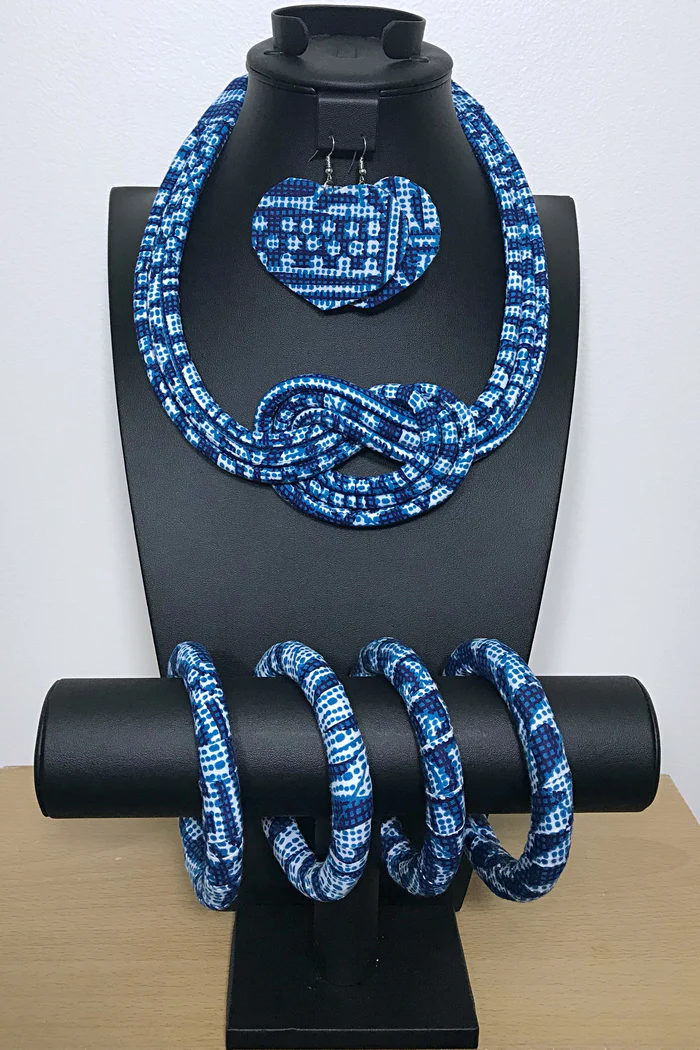
Saturday, May 27, 2023

Ndop Fabric: The Royal Textile of Cameroon

Deep within the vibrant culture and heritage of Cameroon lies a textile masterpiece known as Ndop fabric. This remarkable fabric is
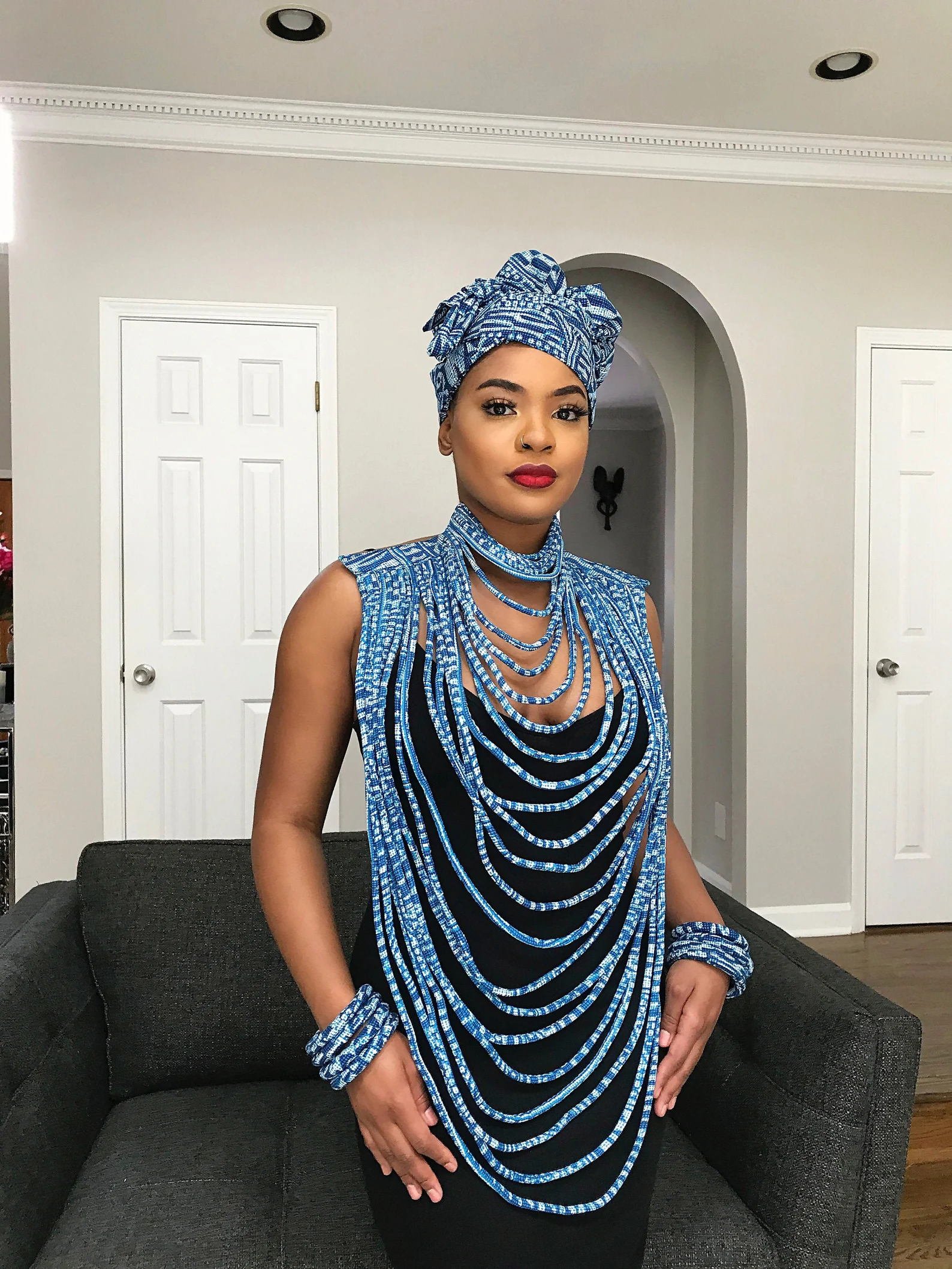
visually stunning and carries profound historical significance. From its origins in the Bamileke and Bamoun kingdoms to its contemporary popularity, Ndop fabric continues to captivate the world with its intricate designs and cultural richness. Join us as we unravel the story behind Ndop fabric, exploring its symbolism, artistic techniques, and enduring allure.


Fabric with Royal Origins

Ndop has been an important textile in Cameroon's Grassfields since the 19th century. Introduced from Wukari, Nigeria, it was once used as a form of currency before the Cameroonian Ndop emerged around 1920. Rich in symbolism, Ndop is traditionally worn by Bamileke and Bamoun royalty, chiefs, and dignitaries during important cultural and ceremonial events.


Symbolism Woven in Threads


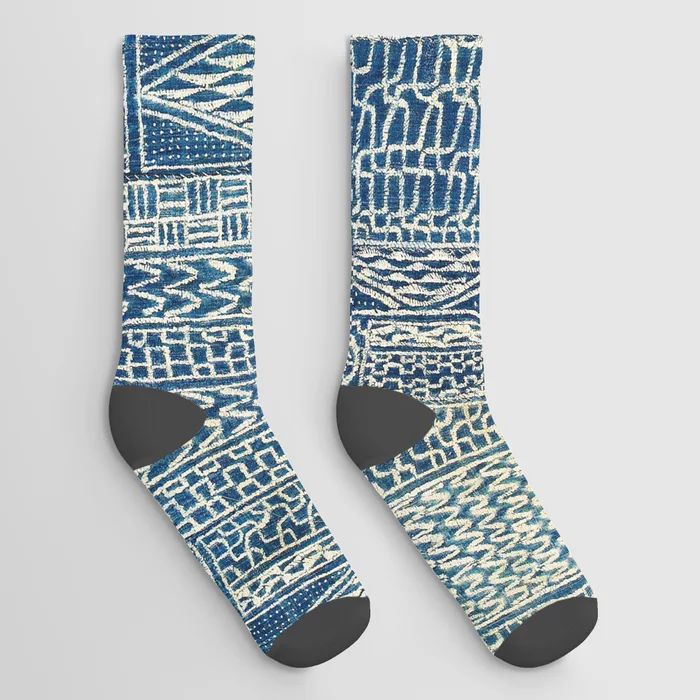
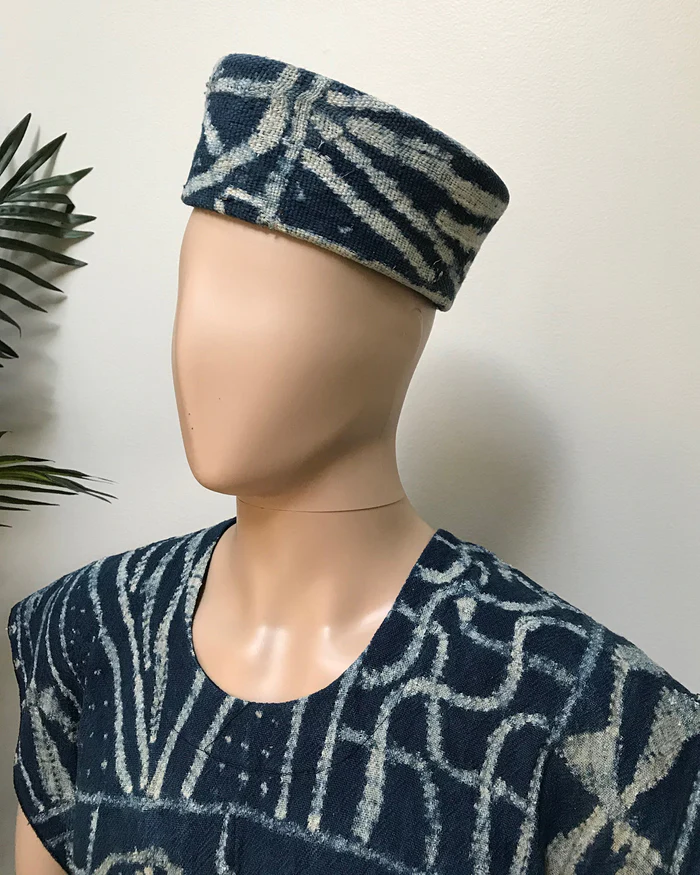
Ndop fabric is made from sewn cotton strips featuring white geometric patterns on an indigo-blue background. Its symbols, including animals, celestial shapes, and abstract designs, carry coded messages of peace, fertility, wisdom, and spirituality. The blue color represents the sky, sea, and supernatural forces, while motifs like the serpent, spider, turtle, and chameleon reflect royal strength, foresight, wisdom, and the cycle of life and death. Ndop is a powerful textile that preserves the history and cultural values of the Bamileke.


The Art of Ndop: Tradition to Modernity

  • Traditional Manufacturing

Traditional Bamileke Ndop is made using a resist-dyeing technique in which raffia threads are stitched onto cotton fabric before it is dyed with indigo. After dyeing, the threads are removed to reveal distinctive white geometric patterns on a deep blue background. This centuries-old craft, preserved in production centers like Bandjoun and Baham, is passed down through generations and reflects the rich cultural heritage of the Bamileke people. 

  • Modern Manufacturing

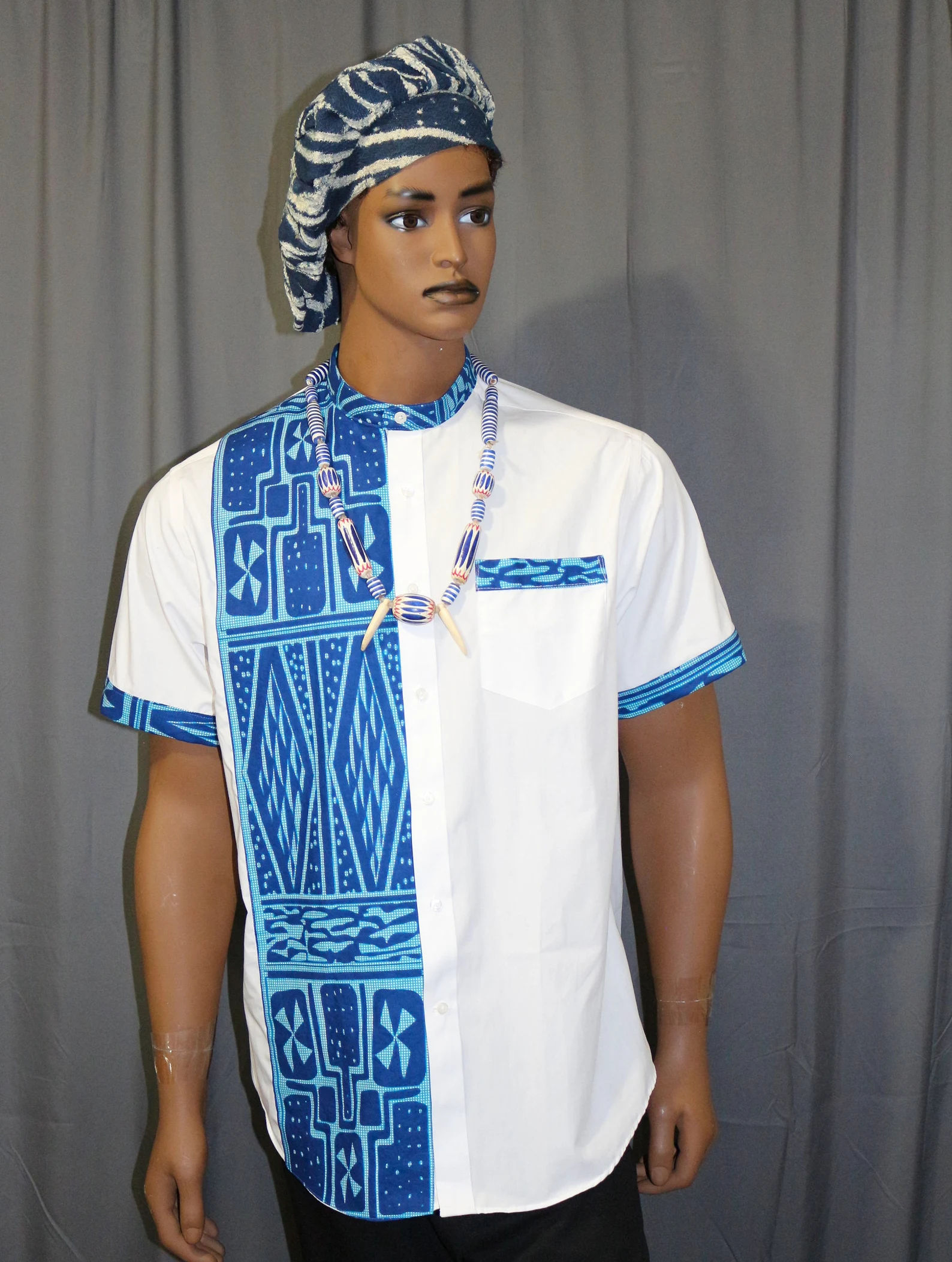
Modern Ndop has evolved from its traditional handwoven, resist-dyed form into fabrics produced through wax printing, rotary printing, and digital techniques. While preserving its iconic white geometric patterns on an indigo-blue background, today's Ndop blends cultural heritage with contemporary fashion. It remains a powerful symbol of Cameroon's effort to honor its traditions while embracing modern creativity.


Ndop Fabric: Weaving Tradition into Modern Life

Beyond clothing, Ndop fabric is used for home décor and accessories such as pillows, tote bags, and flip-flops. Its distinctive patterns inspire modern fashion and interior design while continuing to serve as a sacred ceremonial textile in traditional societies, reflecting its enduring cultural and spiritual significance.

In essence, Ndop fabric continues to be woven into the fabric of Cameroonian culture, reflecting the multifaceted nature of its usage across traditional attire, home decor, contemporary fashion, and sacred rituals. Its presence signifies the legacy of the Bamileke people and their commitment to preserving their cultural heritage.


Ndop fabric is a true cultural marvel from Cameroon, captivating hearts and minds with its intricate designs, vibrant colors, and deep-rooted symbolism. As we celebrate Ndop, we honor the rich heritage and artistic traditions of the Bamileke people, recognizing the significance of this textile in preserving their cultural identity. From its historical origins to its modern interpretations, Ndop continues to inspire creativity, foster cultural appreciation, and serve as a timeless testament to the power of tradition in the ever-evolving world of fashion and beyond.


African fashion is the rhythm of our traditions, the melody of our stories, and the dance of our culture. - La Djalobienne Eton


References:

  • https://www.metmuseum.org/art/collection/search/636847
  • https://fr.wikipedia.org/wiki/Ndop_(textile)
  • https://www.noaliving.com/artworks/traditional-rugs-and-textiles-ndop-cloth-bamileke-people-cameroon/
  • https://www.explore-vc.org/en/objects/the-case-of-ndop-royal-fabric.html
  • https://rootstoglory.com/kings-happi-of-bana-cameroon-the-legacy-of-a-king-after-he-has-traveled/
  • https://www.metmuseum.org/art/collection/search/317937
  • https://lepagneenfolie.wordpress.com/wp-content/uploads/2017/12/412d3dceb2e323167fa3c9bbab88eb5b.jpg
  • https://www.pinterest.com/pin/131378514102190521/
  • https://www.pinterest.com/pin/465067099012308990/
  • https://www.hamillgallery.com/BAMILEKE/BamilekeNdopCloth/NdopCloth02.html
  • https://english.news.cn/20230308/41798aacf1a7491eacd501af0fb28f74/c.html
  • Monday, May 22, 2023

    Fashion Fusion: Blending African Culture and Contemporary Style


    African clothing captivates the world with its rich heritage, bold patterns, and vibrant colors. Blending traditional elements with contemporary influences, it reflects African fashion's diversity, creativity, and dynamism. Join us as we explore the latest trends shaping this vibrant fashion landscape.


    Burst of Colors and Prints

    African clothing is known for its vibrant colors and captivating prints. Bold geometric patterns, nature-inspired motifs, and traditional fabrics such as Ankara, Kente, and Dashiki continue to shape modern African fashion. Ankara, also known as African wax print, is especially popular for its colorful designs and versatility, inspiring dresses, skirts, suits, tops, and more.


    Contemporary Silhouettes and Styles

    African fashion is evolving beyond traditional cuts and silhouettes, blending African aesthetics with contemporary and Western influences. Modern styles such as tailored blazers, wide-leg trousers, jumpsuits, and asymmetrical dresses allow people to celebrate their cultural heritage while embracing global fashion trends.


    Afrocentric Accessories

    Accessories enhance every African outfit's beauty and cultural significance. Afrocentric accessories continue to make a statement, from intricately beaded jewelry to headwraps, statement earrings, and embellished necklaces. These accessories not only add flair but also celebrate African heritage and traditions.  


    The Trendsetting Appeal of African Head Wraps


    African scarves have become a global fashion trend, blending traditional prints with modern designs. Worn around the neck, as head wraps, or styled as belts and bag accessories, they add vibrant color and cultural flair to any outfit. With bold patterns and intricate motifs, African scarves bring elegance and cultural appreciation to both casual and formal looks.


    Contemporary Accessories Infused with Traditional Fabrics

    African handbags and shoes made with traditional fabrics beautifully blend heritage with contemporary style. Crafted from fabrics such as Ankara, Kente, and Mudcloth, these accessories feature vibrant colors, bold patterns, and skilled craftsmanship. Perfect for casual or formal looks, they celebrate African artistry while adding a distinctive cultural touch to modern fashion.


    Current African fashion trends beautifully blend heritage, creativity, and contemporary influences. From vibrant colors and bold prints to sustainable practices and cultural collaborations, African fashion continues to inspire globally. Embracing these trends celebrates cultural pride, creativity, and the rich diversity of African fashion.

    African fashion is a living canvas, where designers paint with colors that reflect the beauty of our landscapes and the diversity of our people. - La Djalobienne Eton


    References:

    https://www.pinterest.com/pin/70437473666224/LinkedIn. (n.d.). Fusion of traditional and modern styles in contemporary fashion. LinkedIn.
    https://www.linkedin.com/pulse/fusion-traditional-modern-styles-contemporary-

    Museum of Archaeology and Anthropology, University of Cambridge. (n.d.). Project on contemporary clothing in Africa: New khanga and kitenge (Ankara) textiles in the MAA collection. University of Cambridge.

    Victoria and Albert Museum. (n.d.). Africa fashion: Cloth of a continent. Victoria and Albert Museum.

    Pinterest. (n.d.). African fashion image [Image]. Pinterest.
    https://www.pinterest.com/pin/112097478205286766/

    Pinterest. (n.d.). African fashion image [Image]. Pinterest.
    https://www.pinterest.com/pin/472174342159902908/

    Pinterest. (n.d.). African fashion image [Image]. Pinterest.
    https://www.pinterest.com/pin/351210470914568835/

    Pinterest. (n.d.). African fashion image [Image]. Pinterest.
    https://www.pinterest.com/pin/70437473666224/

    Amazon. (n.d.). Haoohu women’s African floral pleated dress [Product photograph]. Amazon.
    https://www.amazon.com/Haoohu-Womens-African-Floral-Pleated/dp/B0991R5GG1

    PricelessCulture. (n.d.). African clothing for women: African print infinity dress [Product photograph]. Etsy.
    https://www.etsy.com/nz/listing/977673424/african-clothing-for-women-african-print

    Amazon. (n.d.). LucMatton African printed patchwork traditional clothing [Product photograph]. Amazon.
    https://www.amazon.com/LucMatton-African-Printed-Patchwork-Traditional/dp/B08C579Z7D

    Pinterest. (n.d.). African fashion image [Image]. Pinterest.
    https://www.pinterest.com/pin/706924472745212816/

    Wednesday, May 17, 2023

    A Journey Through Cameroon's Vibrant Textile Heritage


    AIGLE D’OR EKANG Cloth


    Cameroon, located in Central Africa, is known for its rich cultural heritage and diverse ethnic groups. One of the most visible expressions of this diversity is seen in the traditional fabrics worn by the people of Cameroon. These fabrics tell a story of the history and traditions of the Cameroonian people. Let's look closely at some of Cameroon's most famous traditional fabrics.


    Ndop fabric


    Ndop Cloth

    The Ndop cloth is one of Cameroon's most well-known traditional fabrics. Made from locally grown cotton, it uses natural dyes such as indigo and camwood. Its intricate designs and patterns characterize the cloth, created using a resist-dyeing technique. The Bamileke people of Cameroon primarily wear the Ndop cloth, which is often used to make traditional clothing such as shirts, pants, and dresses.


    Cicam fabric


    "Tissu Pagne" CICAM

    "Tissu Pagne" CICAM is a type of African fabric produced by Cameroon Industrial Corporation (CICAM). It is made using locally sourced cotton and is known for its vibrant colors and intricate designs. Tissu Pagne CICAM is commonly used to make traditional African clothing such as dresses, skirts, and headwraps. The fabric is available in various designs, each with its symbolic meaning. For example, some designs represent fertility, prosperity, or royalty, while others depict historical events or local traditions.


    Toghu Fabric


    Toghu

    Toghu, also known as Atoghu, is a traditional fabric that the people of the Northwest region of Cameroon wear. It is made from locally grown cotton and is characterized by its intricate patterns and designs. The cloth is often decorated with beads, cowrie shells, and embroidery and is used to create clothing such as jackets, skirts, and blouses. Toghu is also used in traditional ceremonies such as weddings and funerals.


    Obom Fabric

    Obom

    Obom is a traditional fabric of Cameroon’s Fang-Beti people. Once worn by warriors and reserved for royalty, major ceremonies, and healing rituals, it is traditionally handcrafted from the bark of the Aloa, Andom, or Nloi tree. Today, designers blend Obom with modern materials to create contemporary styles, while its durability keeps it relevant in African fashion.


    Cameroon’s traditional fabrics are vibrant expressions of its cultural heritage, with patterns that reflect history, beliefs, and values. Wearing these fabrics strengthens cultural identity, but globalization and imported textiles threaten their preservation. Supporting local textile industries helps protect these meaningful traditions for future generations.

    Each Cameroonian fabric carries a unique story, a testament to the creativity and ingenuity of our artisans who preserve our cultural legacy. - La Djalobienne Eton


    References

    1. The Metropolitan Museum of Art. “Ndop (Royal Display Cloth).” The Met Collection. The museum documents Ndop as a Bamileke textile from Cameroon made of cotton, wool, and dye, with indigo resist-dyed patterns and strong associations with royal power and ceremonial use.
      The Metropolitan Museum of Art – Ndop Cloth
    2. British Museum. “Display Cloth, Ndop.” The British Museum Collection. This source describes Ndop as woven cotton cloth decorated with indigo stitch-resist patterns and identifies the Bamileke as its producers.
      British Museum – Ndop Cloth
    3. Saint Louis Art Museum. “Display Cloth (Ndop).” Arts of Africa, Oceania, and the Americas Collection. The museum discusses the symbolic and ceremonial importance of Ndop among Bamileke communities and its association with royal hospitality, diplomacy, and sacred knowledge.
      Saint Louis Art Museum – Ndop Cloth
    4. CICAM – Cotonnière Industrielle du Cameroun. “Présentation” and “Accueil CICAM.” CICAM. CICAM provides information about the company’s history, cotton processing, textile production, and its production of printed and dyed fabrics and pagnes in Cameroon.
      CICAM – Official Website
    5. Abianji-Menang, Ophilia A. “Toghu as Indigenous Knowledge and Cultural Enterprise: Material Traditions, Identity, and National Integration in Cameroon.” Advances in Social Sciences Research Journal, vol. 13, no. 4, 2026, pp. 244–258. This academic article examines Toghu as an expression of Indigenous knowledge, cultural identity, heritage, and contemporary cultural enterprise in Cameroon.
    6. Africanews / Reuters. “Cameroon: Designer Finds Fashionable Ways to Promote Ancient Toghu Cloth.” Africanews, 2017. The article discusses Toghu’s historical association with royalty and dignitaries, its embroidery traditions, and its continuing use in contemporary Cameroonian fashion.
      Africanews – Toghu Cloth in Cameroon
    7. Okeyele-Olatunji, Elizabeth. “Toghu Embroidery.” Embroydica. The article provides additional background on Toghu embroidery, its association with Cameroon’s Grassfields region, traditional motifs, materials, and contemporary use.
      Embroydica – Toghu Embroidery
    8. African Heritage. “The Obom: Clothing from the Bark of a Tree!” The source describes Obom as a Fang-Beti bark textile made traditionally from the Aloa tree and explains its traditional production process.
      African Heritage – The Obom
    9. ResearchGate. “Cameroonian Culture.” This publication provides information on Toghu and Obom, including Obom’s Fang-Beti origins, bark-fiber production, ceremonial significance, and traditional uses. 

    Exploring African Print Fabrics: Popular Patterns and Meanings


    African print fabrics are a vibrant and essential part of African culture, with each country's unique style and patterns. These textiles are known for their bold and bright colors, intricate designs, and cultural significance. In this blog, we'll explore the popular patterns and their meanings.


    Nigeria: Ankara Fabric

    Ankara is a wax-printed fabric from Holland but is now widely used in Nigeria. The material comes in various colors and patterns and is used to make traditional clothing, such as buba and iro, as well as modern styles like maxi dresses and blazers. The designs and colors are often inspired by Nigerian culture and traditions, with some symbolizing wealth or good luck.


    Ghana Kente Fabric


    Ghana: Kente Cloth


    Kente cloth is a traditional Ghanaian fabric widely used in West Africa. It is made of interwoven strips of silk or cotton and is known for its vibrant colors and intricate designs. Each pattern and color combination represents a different meaning, with some indicating royalty or spirituality. For example, the black-and-white Kente symbolizes mourning, while the red-and-green Kente represents fertility and growth.


    Kenya: Kikoy Fabric

    Kikoy is a lightweight cotton fabric from Kenya often used as a sarong or beach towel. It comes in various colors and patterns, with some featuring geometric shapes or animal prints. The fabric is often associated with Kenyan coastal culture and is worn by both men and women.


    South Africa: Shweshwe Fabric

    Shweshwe fabric is a printed cotton fabric from South Africa known for its distinctive blue-and-white color combination. It is often used to make traditional clothing, such as dresses, skirts, and shirts. The fabric has a unique smell due to the starch used during printing, which is highly valued in South African culture.


    Senegal: Bazin Fabric

    Bazin fabric is a brocade-like textile originating from Senegal and is often used to make traditional clothing for men and women. It comes in a variety of colors, with some featuring intricate patterns or embroidery. The fabric is often associated with prestige and wealth and is highly valued in Senegalese culture.


    Tanzania: Kitenge Fabric

    Kitenge is a colorful, printed fabric from Tanzania used to make various clothing items, including dresses, skirts, and shirts. The material comes in a range of vibrant colors and patterns, with some featuring traditional African motifs or modern designs. It is often worn for special occasions and is highly valued in Tanzanian culture.


    Mudcloth fabric


    Mali: Mudcloth Cloth

    African mudcloth, or Bogolanfini, is a traditional handwoven cotton fabric from Mali, dyed with fermented mud and decorated with symbolic geometric patterns. Valued for its rich cultural heritage, durability, and distinctive texture, it is widely used in clothing, accessories, and home décor.


    Cameroon: Ndop cloth

    Ndop is a traditional handwoven fabric from the Grassfields region of Cameroon, especially associated with the Bamileke and Bamum people. Made from cotton and dyed a deep indigo blue, it features white geometric patterns that symbolize royalty, wisdom, and cultural heritage. Traditionally worn by chiefs and during important ceremonies, Ndop remains a treasured symbol of Cameroonian identity and craftsmanship.


    African print fabrics are a significant part of African culture, with each country's unique style and patterns. These textiles represent Africa's rich cultural heritage and traditions and testify to the continent's creativity and diversity. Whether you're looking for vibrant Kente cloth or colorful Ankara fabric, there's a wide range of African print fabrics, each with unique meaning and history.

    In the intricate patterns of Africa's textiles, the spirit of generations past finds expression, reminding us of the enduring legacy woven into the fabric of our culture. - La Djalobienne Eton

    References:

    - https://artsandculture.google.com/story/the-fabric-of-africa-african-heritage-house/MwURIFA_fBjSIA?hl=en

    - https://artsandculture.google.com/story/the-fabric-of-africa-african-heritage-house/MwURIFA_fBjSIA?hl=en

    - https://www.ckjs.org.uk/Home_Learning/Year_3/Summer_Term/Week_6_1st_June/Art_Presentation.pdf

    - https://www.contemporary-african-art.com/african-patterns.html