Saturday, July 29, 2023

Bazin: An Elegant and Cultural Masterpiece from Senegal


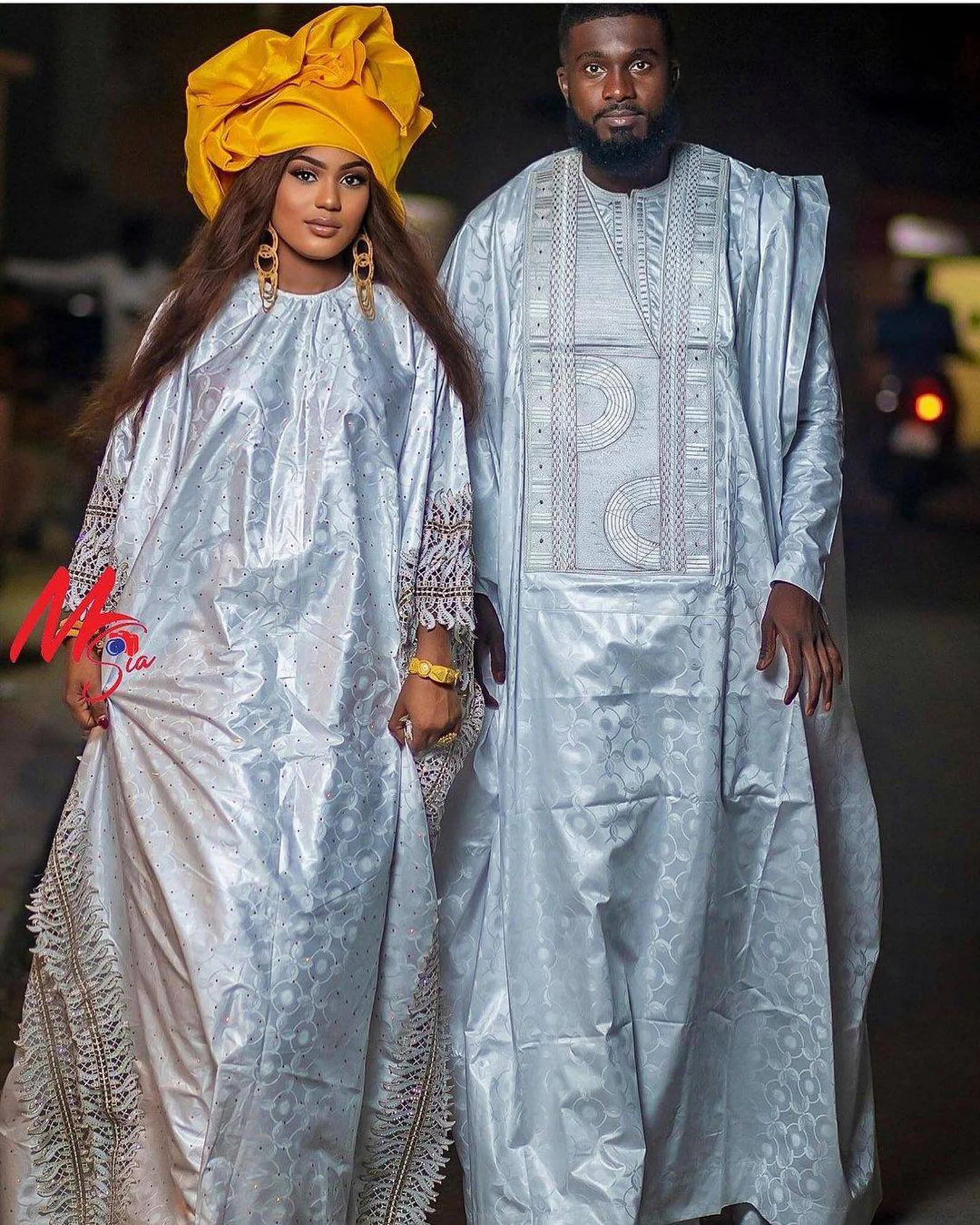
Senegalese Bazin reflects the artistry, heritage, and elegance of Senegalese culture. Rooted in West African history, this luxurious fabric has become a symbol of cultural pride and fashion. From its origins to its production, symbolism, and modern influence, Bazin continues to celebrate and preserve Senegal’s rich artistic heritage.


Senegalese Bazin: From History to Fashion

Senegalese Bazin dates back to the 19th century, when European merchants introduced fabrics to West Africa. Over time, it became closely associated with Senegalese culture and fashion, especially the elegant Boubou, worn by both men and women. Today, Bazin symbolizes cultural pride and remains popular in Senegal and among the West African diaspora.


Production Process

During the 1980s, Senegal’s dyed-fabric trade, known as “thioup” or “thioub,” grew rapidly, helping revive Bazin and boost the fashion industry. Today, local artisans dye and finish imported Bazin using techniques such as “tak,” starching, and beating to create its distinctive shine. 

Skilled tailors transform it into luxurious garments, especially boubous, which are popular in Senegal and across West Africa.


Symbolism and Meaning

Senegalese Bazin carries deep cultural meaning, with its patterns often expressing social status, moods, or important life events. Different designs are worn for weddings, funerals, religious celebrations such as Eid, and everyday occasions, making Bazin a beautiful form of cultural expression and communication.


Versatility and Modern Adaptations

Senegalese Bazin is a versatile fabric used for both traditional and modern clothing. Women wear dresses, skirts, and blouses, while men wear boubous, robes, shirts, and trousers. Its blend of tradition and modern style has made Bazin popular across Africa and worldwide. Events such as the La grande nuit du bazin or nuit du boubou (the night of bazin) celebrate its beauty, artistry, and cultural importance.

Senegalese Bazin represents Senegal’s cultural heritage, artistry, and identity. Through its craftsmanship, colors, and symbolic designs, Bazin celebrates tradition while adapting to modern fashion. It remains a cherished symbol of Senegalese pride and culture.


In the grand boubous of life, Bazin threads remind us that every moment, no matter how small, contributes to the masterpiece. - La Djalobienne Eton

References:

https://en.wikipedia.org/wiki/Bazin_(Senegalese_fashion)

https://lakrozcosmetics.com/bazin

Bazin (Senegalese fashion). (2023, March 21). In Wikipedia. https://en.wikipedia.org/wiki/Bazin_(Senegalese_fashion)

https://youtu.be/TmYWj4X0ldc?si=NifxWkgHX9kL-BBD

Sunday, July 23, 2023

Tuareg Fabric: A Symbol of Sahara Heritage


For centuries, the Tuareg people of the Sahara have created beautiful and meaningful textiles. Known for their iconic indigo-blue color, Tuareg fabrics are valued for their durability, craftsmanship, and cultural symbolism. Today, they continue to inspire modern fashion and design while preserving Tuareg heritage.


History and Symbolism

 Tuareg fabric has a long history rooted in the culture and identity of the Tuareg people. Traditionally used in ceremonies and celebrations, the fabric is valued for its beauty and durability. Its geometric patterns and colors carry cultural meanings, with indigo blue symbolizing the desert sky. Today, Tuareg textiles remain an important expression of heritage and continue to inspire modern fashion and design.


Indigo Dyeing Process

Tuareg fabric is famous for its deep blue color, created through traditional indigo dyeing. Indigo leaves are harvested, fermented, and prepared into a dye bath. The fabric is repeatedly dipped, with drying and oxidation between dips, until the desired shade is achieved. This time-consuming craft, traditionally practiced by Tuareg women, has been passed down through generations and remains an important symbol of Tuareg culture.


Cultural Influence

The Tuareg textile is an important symbol of culture, identity, and pride. Traditionally handwoven and embroidered by Tuareg women, its vibrant colors and symbolic patterns reflect family, religion, and nature. Today, its distinctive designs continue to inspire fashion designers worldwide, bringing Tuareg heritage to modern fashion.


Tuareg Fabric: Tradition, Function, and Modern Style

Tuareg fabric is valued for its beauty, durability, cultural significance, and versatility. Traditionally, men wear long indigo robes to protect against the desert sun and sand, while women often wear embroidered garments that reflect their identity and status. The fabric is also used for bags, blankets, and tents, featuring distinctive geometric patterns. Today, Tuareg textiles continue to inspire modern designers by blending traditional heritage with contemporary fashion.


The Tuareg fabric, with its intricate geometric patterns and iconic blue color achieved through a labor-intensive indigo dyeing process, holds deep cultural significance for the Tuareg people. Woven with traditional techniques, this durable fabric has served various purposes, from clothing to currency, reflecting the rich history and traditions of the Tuareg culture. Today, it continues to be highly valued for its beauty, symbolism, and versatility, inspiring designers and remaining an integral part of the Tuareg's identity.

Tuareg cloth: a canvas of culture, where threads of tradition and hues of indigo intertwine, painting a portrait of resilience and beauty against the vast Sahara backdrop. - La Djalobienne Eton


Works Cited

Arnoldi, Mary Jo. Wrapping the Head, Crowning Achievements. UCLA Fowler Museum of Cultural History, 1995.

British Museum. “Textile; Veil (Af1934,0307.304).” The British Museum, www.britishmuseum.org/collection/object/E_Af1934-0307-304.

Nordquist, Barbara K. Kura Cloth. Smithsonian Libraries and Archives, Smithsonian Institution, 1979. www.si.edu/object/siris_sil_753834.

Polakoff, Claire. Into Indigo: African Textiles and Dyeing Techniques. Smithsonian Institution Press, 1980. www.si.edu/object/siris_sil_120258.

Rasmussen, Susan J. “Dress, Identity, and Gender in Tuareg Culture and Society.” Art of Being Tuareg: Sahara Nomads in a Modern World, UCLA Fowler Museum of Cultural History, 2006.

Smithsonian Institution. “Tuareg Men Gathering around Women for Event Called Tende, near Tombouctou, Mali.” Eliot Elisofon Photographic Archives, National Museum of African Art, Smithsonian Institution, www.si.edu/object/archives/components/sova-eepa-1973-001-ref21133.